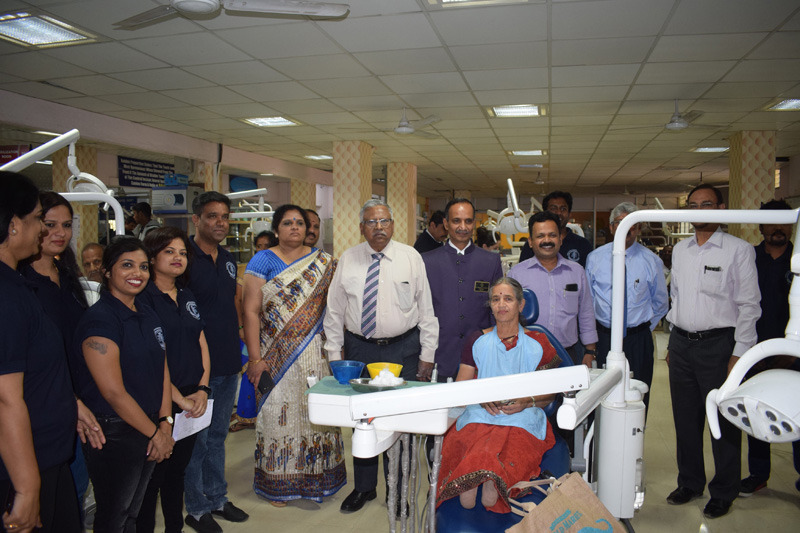
Dental college Survival Tips: Thriving In A Demanding Educational Journey

Dental college is a challenging and demanding educational journey that requires a unique set of skills and strategies to thrive. Aspiring dentists must navigate a rigorous curriculum, hands-on clinical experiences, and high expectations while managing their physical and emotional well-being. This guide offers essential survival tips, from effective time management and study techniques to self-care and stress management, to help dental students not only survive but thrive in their pursuit of a rewarding and fulfilling career in dentistry. By adopting these strategies, students can navigate the complexities of dental education and emerge as confident, skilled, and well-balanced professionals. Here are essential tips to help you succeed in dental college:

Dental College And Stress For Students

Dental college can be an exceptionally stressful experience for students. The demanding nature of dental education, which combines rigorous academic coursework with hands-on clinical training, can take a toll on students’ physical and mental well-being. The pressure to excel in both theoretical and practical aspects of dentistry, along with the responsibility of patient care, can be overwhelming. Students often find themselves grappling with tight schedules, frequent examinations, and the expectation of delivering precise, error-free treatments to patients. This stress can lead to sleep deprivation, anxiety, and burnout.

Additionally, the financial burden of dental education, with high tuition costs and the prospect of significant student loan debt, adds to the stress. The competitive nature of dental colleges and the desire to secure a place in top specialties can further intensify the stress levels. To cope, students should prioritise self-care, seek support from peers, professors, or counselling services, and develop effective time management strategies. Addressing stress is crucial not only for academic success but also for maintaining the mental and emotional well-being of dental students.

Essential Survival Tips

Dental college is a demanding and challenging endeavour, but with the right strategies, you can successfully navigate this journey and excel. Here are five key survival tips:

Effective Time Management

Time management is crucial in dental college to juggle classes, labs, clinical work, and extensive study requirements so:

  • Create a Detailed Schedule: Develop a weekly or monthly schedule that outlines your class times, study hours, and even personal time for relaxation. Stick to this schedule as closely as possible to maintain a structured routine.
  • Prioritise Tasks: Identify your most urgent and important tasks each day. Use techniques like the Eisenhower Matrix (dividing tasks into quadrants based on urgency and importance) to guide your focus.
  • Set Realistic Goals: Break your lessons into manageable sections. This approach makes large projects seem less daunting and helps you track your progress.
  • Minimise Distractions: Find a quiet, organised study space free from distractions like your phone or social media. Consider using time management apps or website blockers to stay focused.

Effective Study Strategies

Studying efficiently is key to mastering the vast amount of information in dental college. Consider the following strategies:

  • Active Learning: Instead of passively reading or listening, engage with the material. Take notes, ask questions, summarise information, and teach concepts to someone else.
  • Study Groups: Form or join study groups to discuss complex topics, clarify doubts, and quiz each other. Explaining concepts to peers can deepen your understanding.
  • Spaced Repetition: Use the spaced repetition technique to review and reinforce knowledge over time. This approach enhances long-term retention of information.
  • Practice with Past Exams: Review past exams and practice questions to familiarise yourself with the format and the types of questions you may encounter in your assessments.

Self-Care and Wellness

Maintaining your well-being is crucial for success in dental college so check and see these tips on how to take care of yourself:

  • Adequate Sleep: Prioritise sleep to ensure you are well-rested and mentally sharp. Lack of sleep can hinder your cognitive abilities and increase stress.
  • Balanced Diet: Eating nutritious meals acts as a fuel for your body and brain. Try to avoid the consumption of excessive caffeine and sugar, as it leads to an energy crash.
  • Regular Exercise: Incorporate physical activity into your routine to boost energy, reduce stress, and improve your overall well-being.
  • Stress Management: Practise stress-reduction techniques such as meditation, deep breathing exercises, or yoga to stay calm and focused.
  • Social Support: Maintain connections with friends and family to provide emotional support and maintain a healthy work-life balance.

Seek Support

dental college can be overwhelming, so don’t hesitate to seek support when needed:

  • Academic Advisors: Consult with faculty or academic advisors to discuss your academic progress, challenges, and get guidance on course selection and study strategies.
  • Study Groups: Join or form study groups to share knowledge, clarify doubts, and provide mutual support during challenging times.
  • Counselling Services: If you face emotional or mental health challenges, consider utilising counselling services provided by your school. It’s essential to address these issues and seek professional help when necessary.

Stay Motivated and Maintain a Work-Life Balance

Maintaining motivation and finding a balance between work and personal life is essential:

  • Setting Clear Goals: Keep your long-term goals in mind. Remind yourself why you chose to pursue dentistry, and let this motivation drive your efforts during challenging times.
  • Coping with Challenges: Understand that failures and setbacks are part of the learning process to use it as an opportunity to learn and grow.
  • Mentorship: Seek advice and mentorship from experienced faculty members or practising dentists. They can provide insights, guidance, and valuable perspectives on your dental career.
  • Work-Life Balance: Avoid overworking and prioritise time for relaxation, hobbies, and personal interests. A healthy work-life balance will prevent burnout and keep you motivated.

In conclusion, dental college is a demanding journey, but with effective time management, study strategies, self-care, a support system, and motivation, you can not only survive but thrive in this challenging environment. These tips by RRDCH will help you maintain your physical and mental well-being while excelling academically, ultimately preparing you for a successful career in dentistry. Remember that perseverance, dedication, and a passion for the field are essential components of your dental college survival kit.

Mental Health And Oral Health – Is There A Connect?

Well, stress is known to affect physical and mental health both but people are not aware around the connect of mental health with oral health too. People with stress conditions like bio-polar disorders and chronic depression often tend to ignore oral health issues at times. This leads to deterioration of oral health and on an average compared to general people, people with mental health issues are over three times more likely to lose teeth. Not many know that high stress levels could raise the cortisol hormone levels leading to periodontal disease conditions. Here are some of the reasons why mental illness leads to oral health issues as well.

Mental Health And Oral Health

Eating Habits – Eating disorder like bulimia could result in erosion of teeth due to acidity spike and vomiting. Also, there is a loss of calcium which in turn leads to deterioration of dental health.

Anxiety – Many people with mental health issues could also suffer from dental phobia and hence avoid dental visits.

Ignoring – Many people do not give importance to or pay attention to dental health issues including people with mental health issues.

Hygiene – Improper dental hygiene also leads to oral health issues as people do not tend to brush their teeth and take care of their dental health properly.

Medicines – Many times mental health medications do have side effects that cause oral health issues like dry mouth and more.

So, yes there is a connect between mental health and dental health in a way and if you live a healthy lifestyle and follow your oral hygiene routines properly even if you have a mental health condition you can manage dental health issues properly. Not to miss out, this does include staying away from harmful addictions like excess tobacco intake, smoking as well as do much of drinking and drug use.

*Just know about Rajarajeswari Dental College and Hospital

Headaches Could Be A Result Of An Underlying Dental Problem

None of us can think of visiting a dentist when having a prolonged or recurrent headaches, ain’t it? Obviously, because considering headache to be a result of teeth conditions is far from anyone’s thinking really. One reason is that it is extremely rare and there could be many more reasons for headaches and a dental problem is the least thought off. Here’s a case study where a 45 year old lady was having recurrent headache for a long period of time. She paid many visits to physicians, ENT specialists as well as Neurosurgeons and even underwent many diagnostic tests like EEF, MRI and CT Scans but with no success in diagnosis about the reason. She was then suggested by Neurosurgeons to go for an open surgery of 2 lacs cost. She was already distraught about not known the reason behind the suffering.

Amidst all this chaos her daughter found out through her on research and judgement that it could be a dental condition. She then visited one of the popular dental clinic chains in Bangalore and the doctors immediately diagnosed it as a dental condition. The headache was because the lady was having unevenly aligned teeth in a small jaw. As a result of improper placement and crowding, it was triggering headache.

The doctors then created a treatment plan of action for here which was short, simple and even painless to an extent. After the orthodontic treatment was done, not only did she get rid of her headache but also got her beautiful smile.

This only throws out one question, if only had she not heard to her daughters suggestion and went ahead with the open surgery, the results could have been unimaginable. Additionally, it could have cost her a bomb that too on a surgery that wasn’t needed at all.

Well, this also brings to light the fact around lack of awareness or ignorance of dental problems and issues in the country. Dental health is equally important and ignoring it is not a good idea, and awareness around it can always help.

*Sourced from Internet

RRDCH is one of the Top Dental College and Hospital in Bangalore

Smile For Life And – The Dental Theme Of The Year And Present Scenario

World Oral health day was celebrate on March 20, 2019 with the theme – Smile for life. Well, if we consider India there has be significant advancement of technology in dentistry domain and development too. Yet, statistics tell a different story which says that a major chunk of Indian population are not able to have access to dental facilities and its benefits due to various different reasons.

The National Oral Health Program of India shows startling statistics around dental health and facilities in India. As per its report around 95% of Indians suffer from gum disease, 70% of the children under 15 years of age have dental issues and 50% of the population of India don’t even use a toothbrush for that matter.

A report titles Utilization of dental care- An India outlook published in the Journal of Natural Science, Biology and Medicine shows an awful dentist patient ratio difference in Urban and Rural Areas. While in urban areas the ratio is 1:10,000 its 1:150000 in rural areas. People in rural areas as compared to urban areas do not have access to even basic dental care due to reasons like lack of infrastructure, behavioral, socio-economic, demographic as well as epidemiological factors. People in rural areas still fear dental treatment and there is a lack of awareness in them about the importance of oral health as well.

This only means that there is not only a need to have basic dental health facilities in the remote rural areas of India but also simultaneously have awareness initiatives and programs about importance of oral health and the need for dental checkups and on time treatment and programs to take the fear out of the community around dental procedures. People need to be aware that oral health is equally important as general health and provide dental care services that are at par with facilities in urban areas. The IDA has already calculated the growth rate of dental industry by 30% and has to meet the same presently has 290 dental colleges that churns out 25,000 graduates every year. India has housed almost 2 lac dental professionals including 5000 labs and 35000 specialists. As per the World health organization, India still needs to setup 2500 dental clinics every year to meet such a high demand. India is already a huge market for dentistry particularly with growing incomes and awareness for dental care in urban but it’s the rural areas of India where the focus needs to be more and the role of the government here is a big one for sure. Even Dentists can join the movement by education consumers. Nowadays, branded dental chains and networks are beginning to spread their wings. A welcome move, this can certainly help in propagating the message around dental care and treatment and achieve the goals of –smile for life.

*Sourced from Internet

know more about Top Dental Colleges in Bangalore

Sealants – An Overview

Cavities are one of the most common dental problems in India. While, the basic solution to this problem is brushing and flossing on a daily basis, still many a times you cannot reach every nook and corner. The molars that we use to chew are of uneven shape and rough and it’s possible that even after cleaning bacteria can still remain back. But, fret not, there is a solution to protect them too and it is known as sealants.

Sealants before and after

Sealants

Sealants are like protection shields for the teeth. There is a thin coating made from plastic or similar dental material and stick to the surface of your back teeth. These sealants are known to be highly effective and have an ability to reduce tooth decay by almost 80% in molars. Outside India and as per the reports of Center of Disease control (CDC) around 43% of the children who do not use sealants are at three times higher risk of getting cavities.

Like you wear raincoats to save yourself from rain, you wear sealants to save your teeth from decay, it is as simple as that. The bacteria responsible for cavities reside in the mouth and with the help of food particles that are left back produce acids that further lead to creation of holes inside the mouth, called cavities. Once the sealants are applied they protect the teeth from decay. The process of application is quite simple and pain free. The dentist cleans your teeth dry and applies an acidic gel on your teeth, in order to roughen up the surface. Once the sealant is applied on this surface it will form a strong bond with the sealant post application. After some time of application of the gel, the dentist rinses the tooth once again and then applies the sealant in the teeth grooves. The dentist makes use of the special blue light to harden the sealant.

Sealants can be used for children above 12 years of age and adults as well. They can be used in areas where decay has just begun so as to avoid further decay. Sealants are transparent in color and hence ensuring the sealant is doing its job is easy for the dentist.

*Sourced from Internet

Know more about Top Dental Colleges in Bangalore, India

Dental Public Health In India – A Concern?

Oral health has been a cause of concern in India. The primary reason is the high level consumption of tobacco and next is unawareness about it particularly in rural areas. Excessive usage of tobacco and added to that lack of oral hygiene amongst Indians more so rural Indians has led to loss of lives due to oral cancers and other life threatening conditions. One example is that of a 42 year old Bareilly resident Mohsin Khan, an embroidery worker who started chewing tobacco on the behest of friends. Recently, he faced issues with concentration while doing embroidery after he returned from a Tobacco Cessation Cell in New Delhi, but it was too late for him as he had been diagnosed with leukoplakia viz. a pre-cancerous lesion. He also mentioned that he wasn’t aware that oral health was so vital and could cause life threatening conditions like Cancer. He also mentioned that he used to clean his teeth using Neem Sticks and Coal Ash.

Dental Public Health In India

As per government statistics over 70% of the school children have cavities and over 90% of the adult population in India does get affected by periodontal condition. Even National Oral Health Policy draft of 2018 does mention that oral diseases in India are rampant and repetitive as well making it a silent epidemic of sorts.

Oral issues within Indian children and adults in India include problems like cavities, periodontal conditions, oro-facial anomalies, temporo-mandibular joint disorders, loss of teeth, dental fluorosis, dental trauma as well as oral cancers as per Consultant Dentist of Columbia Asia Hospital.

Rural Areas it gets worse because there is lack of infrastructure there. Scarcity of dental health professionals in public hospitals is also and added issue. Well, this makes it difficult for the common man as he/ she have to shell out the expenses for oral treatment from their own pockets. As a result the common man opts out of treatment and goes for extraction, which is a cheaper way out.

Well, addictions like alcohol and tobacco do play a vital role in oral health. Additionally people in India ignore dental health issues big time. There has been proven research that managing dental health properly can help prevent many health conditions and even reduces the risk of diabetes, preterm labor and even heart attack as per Praveshh Gaur, Founder, Director of Srauta Wellness Center.

*Sourced from Internet

Just know about Rajarajeswari Dental College and Hospital, Bangalore

Drinking Water Is Good For Dental Health

Drinking Water Is Good For Dental Health

We all are already aware of the enormous health benefits water provides to human beings. Calling it the healthiest drink ever could be an understatement considering the benefits it comes loaded with. From hydrating the body to keeping your skin and other organs of the body healthy, it is a health package with something for every organ of the body, if you may say so. You want to increase your metabolism, drink water. You want to lose weight, drink water, you want a glowing skin free from wrinkles and dark circles, drink water. Water is the ultimate answer to many questions around healthy body. What’s more drinking more water can also help you manage your oral health. Well, most of you might be aware of it already. For shiny healthy teeth along-side brushing, flossing and gargling, drinking a lot of water can actually help keep teeth shining and healthy. As our body is made up of over 60% of water, staying hydrated keeps the nutrients flowing throughout the body and thus providing glow to your skin and elasticity as well. The waste is also discarded and it also helps your muscles. If the water is fluoridated, it’s all the more helpful for health. Drinking water that has fluoride and yes as on day there are only a few countries like USA who ensure that the water has fluoride in it for the health of your teeth. A natural element it helps in prevention of tooth decay by mixing with the tooth enamel. It also helps in prevention plaque deposits on teeth by working with saliva. Drinking water frequently helps keep the mouth clean and avoids wash away the remains of food particles, soda, sugars, etc. that are responsible for formation of bacteria. Water dilutes all the acid present in the mouth and reverse tooth decay.

Dry mouth can invite bacteria and due to reduced production of saliva tooth decay could be boosted. Drinking a lot of water ensure that your mouth is not dry and tooth decay is kept at bay. One of the simple solutions against bad breadth is drinking a lot of water. The bad breath particularly when you wake up is a result of dry mouth. If you drink water throughout the day then it can help you wash away all the bacteria causing particles and fight dry mouth that causes bad breadth.

Well, water is calorie free and is loaded with benefits hence making drinking atleast three litres of water as an adult throughout the day can help your oral health and over all body as well. Make drinking water a way of life and see how life smiles at you.

*Sourced from Internet

Just know about Rajarajeswari Dental College and Hospital in Bangalore

Frailty Among Indian Elderly. Is Poor Dental Health The Culprit?

For those who aren’t aware what frailty is all about, it means vulnerability towards dental health conditions or inability to perform daily routines due to declining health. One of the risk factors of frailty is poor oral health because it effects the abilities like smiling, eating and even speaking, ultimately the quality of life.

A study including 7735 British male participants and published in the American Geriatrics Society Journal does show that frailty and oral hygiene to go hand in hand.

The study started off when the participants were 40-59 years old in 1978 -1980. Then again in 2010-2012 the 1722 participants who were alive then were called for re-examination. At that time their age was 71-92 years. The participants were examined for their physical health, vital statistics as well as weight, walking and grip test as well. A questionnaire explaining their medical history as well as lifestyle was also needed to be answered besides information around social medical and health.

Additionally, there was a dental exam for noting the frailty status of the participants. The confirmation of frailty was done on the basis of three issues – weak grip, slow walking speed, weight loss, exhaustion or low physical activity levels.

Dental examination showed that around more than half viz. 64 percent had less than 21 teeth, over 54 percent were suffering from gum disease, 34 percent of the participants rated their oral health as poor or fair, 29 percent exhibited minimum two symptoms of dry mouth while almost 20 percent were having no teeth at all. 11 percent of the participants had difficulty eating food.

Well, considering this study, there seems to be a direction connection between frailty and oral health. As per an expert Dr. Carter, Chief Executive Oral health Foundation, in UK the people have good longevity but it comes at the cost of significant health problems for people over 65 years of age. Hence, brushing teeth effectively is necessary but due to dexterity and limited mobility, it makes it hard for the elders to do so. Hence, its advisable that elders give priority to their oral health and even the government takes measures in devising a effective oral health system particularly for the elder population.

*Sourced from the Internet

Just know about RRDCH Banglaore

Wisdom Teeth – All You Need To Know About The Third And The Last Molars

Known to be the last of the permanent teeth that erupt on side of the upper and lower jaws, the process of eruption can be a problem many a times because there is very little room left to accommodate these molars. As a result most of the times these teeth erupt either partially or in a crooked form. There is therefore a possibility of these teeth getting impacted is high further resulting into tenderness and swelling of the areas around them.

Wisdom Teeth

As per the American Dental Association it is better that teenagers of 16-19 years age evaluate their wisdom teeth for if there is a need to remove them. Once you visit your dentist, he/she will carry out the routine diagnosis for the same. If there’s a need for uprooting the molar, he/she will recommend the removal of the impacted teeth. This will include either the use of local or general anesthesia or IV sedation. In order to limit the bleeding caused due to the extraction the doctor will ask you to bite on a soft gauze piece for over 30 to 45 minutes.

The procedure is also a simple one, wherein the Surgeon puts an incision into the gums incase the impacted teeth is imbedded in the bone and will remove it in sections so that he is able to save as much bone as possible. The side effect includes a probable swelling that would go away within a few days. If the swelling, pain, fever or bleeding continuous consult the doctor on an immediate basis.

Dental colleges in bangalore

One of the complications that could occur and is rare is dry socket. Normally, after the tooth extraction, a blood clot forms in the tooth socket and helps the area to heal. In rare cases dry socket occurs wherein the blood clot breaks down exposing the nerves as well as the bone of the tooth. It is a highly painful condition and needs medical attention on an immediate basis.

The dentist primarily rinses the affected area, removes debris around it if any and then dresses it up in order to reduce the pain and protect it from further damage. Additionally, he/she might prescribe painkillers to pain relief and prevent infection. The condition takes around 10 days to heal with proper medical care and rest.

BDS, MDS Admissions 2019-20

*Sourced from the Internet

Thumsucking And Pacifier – How It Affects The Teeth Of Infants And Children

A natural reflex in infants and growing toddlers, thumb sucking or pacifying themselves with objects is very common. The reason cited around the same is that the little ones feel happy and secure as well. Apparently, it helps them know the world better and many times it helps to soothe themselves and fall asleep.

Thumb sucking can be considered a problem for the teeth of the child only if the intensity is too high. Even pacifiers have the same effect on children as thumb sucking, based on the frequency of using them. Also, if kids only use the pacifier or thumb to rest it in the mouth, it does not have any harm but if they suck the thumb or pacifier too vigorously, it does affect your teeth for sure.

Thumsucking And Pacifier

The thumb sucking or using pacifiers continuous for upto four years of age generally. Children who suck their thumb aggressively do tend to affect the primary teeth and hence it’s important to take steps when you find that your child is into thumb-sucking or pacifying continuously. It is also known that once the permanent teeth are in place, thumb sucking or pacifying can cause To help your child give up the habit you may do your bit by doing the following –

  1. Make them feel comfortable and secure

  2. Explain your child, if he/she can understand about the disadvantages of thumb sucking / pacifying

  3. Try to use different methods for getting rid of the habit

  4. Whenever you find your child not sucking, appreciate it

  5. Even trying to put a bandage around the thumb is a good idea

If problems persist even after trying, then it is advisable to consult a dentist or pediatrician. They will help you with medication that tastes bitter or with some thumb coater.

Dental colleges in bangalore

Thumb sucking or using pacifiers is a very common problem that infants and toddlers face in their early years. Nevertheless, it is not a problem that has no solution, so try working it out with kids at home through some tried and tested ways or else coordinate with your pediatrician or dentist and you’ll find a way out.

*Sourced from the Internet

Contact for Dental College Admissions 2019-20, BDS, MDS