How to Heal Cavities Naturally

We all know that Cavities is a very common dental health disorder but what we don’t know is that we can prevent it using naturally by making certain changes in your diet. There are many causes of cavities but one of the main reasons is besides decay is dental anxiety. Furthermore, it’s good to be aware of the fact that cavities are avoidable and even reversible to some extent particularly the smaller ones that too at the convenience of your home, with certain dietary changes. But, before we talk about the food let’s find out what causes cavities and the factors working around cavity formation.
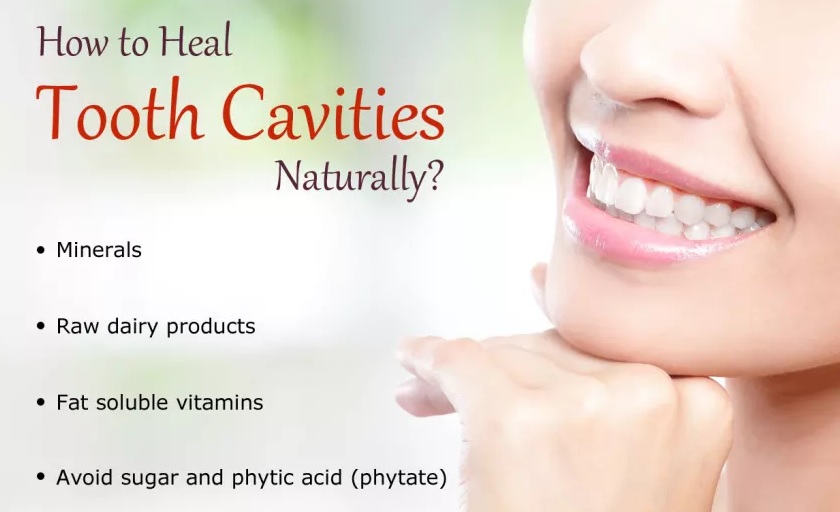
How to Heal Cavities Naturally

CAUSES

Plaque Acid Presence – Plaque acids are one of the main causes that lead to tooth decay and are produced by the bacteria that reside in our mouths. These acids attack teeth and dissolve the vital minerals on the surface of the teeth.

Deficiency of Soluble Vitamins – Deficiency of soluble Vitamins especially Vitamin D and others like A, E and K in the diet.

Deficiency of Minerals – Deficiency of vital nutrients like calcium, magnesium and phosphorus in the diet.

Excess Processed Sugar – Excess sugar in diet feeds oral bacteria thereby restricting the flow of dental fluids causing decay through demineralization and decalcification.

Excess Phytic acid – Also known as Phytate, Phytic causes mineral deficiencies by blocking them and osteoporosis.
A study was carried out to figure out the dietary effects on cavities. The study involved 62 kids having cavities. These kids were further divided in 3 groups as follows –

  • Group 1 followed a standard diet plus took oatmeal.
  • Group 2 followed a routine diet plus took Vitamin D supplements.
  • Group 3 followed a grain less diet plus took Vitamin D supplements.The results showed that nearly

all cavities of Group 3 healed, which followed a diet that was free from grains and rich in milk and meat, fruits and vegetables.

NATURAL TREATMENT/ REVERSAL
To avoid cavities, you need to make certain changes in diet in addition to regular brushing as well as flossing.

Avoid Sugar – Sugar is one of the main causes of tooth problems. So keeping your sweet tooth at bay is always a good idea because sugar it is highly acidic in nature and cause decay through decalcification and demineralization.

Avoid Food Rich in Phytic Acid – Ancient food preparing methods, like fermentation of dough, sprouting and more kept phytic acids at bay. Phytic acid is present in foods like grains, beans, seeds and nuts. Using traditional food preparing methods like above can help reduce pytic acids by a staggering 50% to 100%.

Additionally follow a diet that is rich in vitamins and minerals and keep cavities as bay as well as reversal of existing ones.


RRDCH is one of the best private dental college in Bangalore Karnataka


*Sourced from the Internet

Where do Your Teeth Actually Go After Extraction?

Well, it’s different in different places of the world and while countries like USA might have stringent rules and regulations pertaining disposal of medical waste, in India the laws are not as stringent or put into effect as abroad. Well, the tooth is yours and you have full control over what you want to do it as in whether you want to keep it or dispose it. But, not many know that If you are living in a country like USA there are rules and regulations that you need to adhere to even if it’s about your won dental waste. Here’s some information around it.

As per the local, state and federal health regulations, your tooth could have tissue residue, saliva or blood on it, hence making it a medical waste product. The dentists are already taught to deal with medical waste and that returning it to the patient is against the dental law. Though, many dental association in America like the Occupational Safety and Health Administration (OSHA), The Centre for Disease Control and Prevention (CDC) and the American Dental Association – all do permit taking the tooth home, yet the dentist would have to sterilize it before he or she hands it over.

Tooth without metal Filings
The Centre of Disease control and Prevention (CDC) in America consider an extracted tooth without any metal fillings as infectious and are to be disposed of using the hazardous waste containers, which are picked up by the medical waste management companies and is incinerated.

Tooth with metal filingsX
If your teeth contain metal particularly if its amalgam, which is a combination of many metals like tin, copper, zinc, silver and mercury then as per CDC it cannot be incinerated because there are concerns regarding emission of toxic fumes on exposure to high temperatures for incineration.

So, this sort of an extracted tooth is placed separately away from the medical waste and sent to a specialized medical recycling centre. At the centre, the hazardous material are removed off the teeth and are disposed of safely before further procedures are undertaken. Dental scrap like molds and grindings are also sent for recycling many a times.

The dentist is paid for the metal though but if you are thinking of taking your tooth home for earning some bucks out of it, well, then it is not a good idea. The recycling business is a bulk business and hence to earn a fat amount you need to sell quite a few.

Not all dentists sell it, there are many who donate teeth for research purpose in medical labs and dental schools. Well, celebrity teeth might gain a lot of bucks and there have been cases where celebrity tooth have been auctioned for a fat amount for the purpose of cloning. Dentists use teeth for advertising and fulfilling some bizarre desires like teeth jewelry or as visual aids in educational seminars

RajaRajeswari Dental College & Hospital was established in the year 1992 with just 40 admissions in BDS course. It was housed in a rented building measuring 40,000 Sq. Feet. Now it has progressed to a full- fledged Postgraduate Dental Institution with 100 BDS admissions and MDS courses in all specialties of Dental Surgery. In addition, PhD in Orthodontics, Periodontology and certificate course in Implantology are also offered in RRDCH.

*Sourced from the Internet

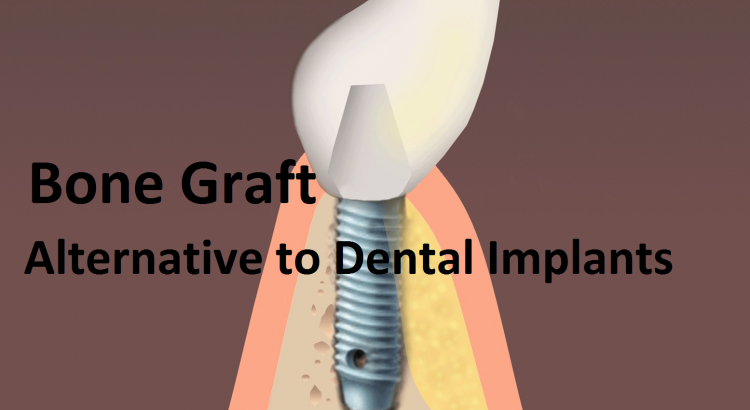
Bone Graft-Alternative Dental Implant

Bone Graft – Dental treatment That Works well

Bone graft is an alternative to dental implants. It is generally done when the jaw bone is too soft or thin and fails to have the ability to keep the implanted tooth in place or causes implant surgery to fail.
It is apparently a type of surgery which is also used for fixing the damages done by gum diseases, trauma or tooth loss. As we age dental implants are needed and bone graft surgery apparently is very useful as it provides structural stability by filling up the voids in areas where the bone is not present. Even for maintaining the bone structure post tooth extraction bone grafting is carried out.

Graft surgery is of two types –

1. Autograft – As the name suggests the use of bones that are present in the body like wrist bone, pelvis bone or ribs.

2. Allograft – This surgery uses the bone of a donor who is dead or a cadaver after it is cleaned and archived in the tissue bank.

Your dentist does the diagnosis and decides on the type of bone graft is required. It is an anaestheisa assisted surgery so should be almost pain free. The process includes skin incision above the area where the graft is required. Then the bone is shaped to fit the area and with the help of plates, screws, cables or wires and pins is held in place. Once secure, the incision is stitched up.

After the surgery care needs to be taken in order to ensure the success of the surgery. The healing time is generally of over 3 months. It is advisable to eat foods that are soft and to avoid extreme exercising. In order to avoid infection of any kind, the dentist will also orient you on flossing and brushing in a suitable way. For smokers though, it is advisable to stop smoking or else the graft might fail due to prolonged bone healing on account of smoking.

Here is a run down some of the benefits of Bone Graft
It can be used for various dental issues like tooth implant, poor jaw conditions or tooth loss.
It is useful if you have an implant in the future.
It helps protecting the mouth against shrinkage in width and height over a period of time
The aesthetics of the jaw line as in the strength and shape of the bony ridge post tooth loss.
It helps in avoiding the otherwise fragile jaw structure from shortening or narrowing down

Bone grafting can be expensive but in India its quite affordable as compared to foreign countries where people opt in for medical tourism to countries like India or Mexico for dental treatments.

Know about dental implantology

Know more about Good Dental Colleges in Bangalore

Dental Abscess

Dental Abscess – All You Need To know About

Many of us aren’t really aware of dental abscess. Tooth abscess is apparently a painful condition and occurs when the root of the tooth is infected or the infection lies amidst tooth and gum. This condition is known as gingivitis or gum disease and is known to occur due to tooth decay or high severity causing trauma and pain to the tooth.

The symptoms of tooth abscess include swollen neckglands, difficulty while chewing, swelling and redness of gums, sensitivity with hot or cold and fever as well. Tooth abscess can spread to the root and to the bones supporting the tooth as well and mind it abscess spreads quickly in a period of just two days or so, post the start of the infection. So, it is important to consult your doctors if you find one or more of the above symptoms with yourself.

Abscess are of two types –
Periapical abscess – This occurs when one nerve of the tooth is dead or about to die and is caused inside the tooth. It shows at the tip of the tooth’s root and spreads around the bone surrounding it eventually.

Periodontal abscess – This occurs when there is an infection between the teeth and gum usually due to accumulation of food particles and debris within the two. It becomes worse after the infections surrounds the bone below the gums.
Treatment

Dental Abscess needs to be treated from a dentist. The procedure is known as root canal therapy and most of us are familiar with this treatment because it is a common dental treatment. During the procedure, the tooth is extracted while drainage occurs through the socket or alternatively at times incision is made into the gum tissue to drain out the abscess

Tooth abscess is a common condition of teeth that can occur to anyone and everyone at some point of time or other. In order to delay the process or avoid it to an extent it is advisable to follow proper dental hygiene that includes brushing teeth atleast two times a day and that too properly besides flossing, tongue cleaning and using mouthwash for a fresh breath and cavity free mouth.

Rajarajeswari Dental College and Hospital is one of the  Best Dental Colleges in Bangalore

Emergency Orthodontic Care

Emergency Orthodontic Care – An Overview

There is a very rare possibility of any emergency occurring with respect to dental issues. Most of the dental issues do not get you into an emergency situation but yes sometimes, dental issues might lead to pain and irritation or discomfort.

Here is a run down some of these issues and how to deal with them.

Ligature issues – This issue arising when you use brackets. Fine wires or rubber bands are used to hold the brackets. At times the ligatures may become loose and stick to your lip. This could lead to irritation. Hence, when a ligature goes loose you may tighten it by bending it back with the help of a rubber attached on the back of pencils.

Mouth Sores – If you wear braces, getting mouth sores might just be a common possibility with you. This does lead to irritation, discomfort and mouth ulcers. At such times, mouth wash and warm salt water gargles do help out in suppressing the pain and discomfort.

Swallowing – If you by mistake swallow some piece related to your braces, when you are wearing braces then, its better to consult the doctor immediately. The symptoms include sneezing, coughing or wheezing.

Loose Brackets and more – If you wear braces, you usually are aware of these issues. These brackets tend to loosen up due to chewing or eating crunchy or hard foods. This can lead to problems like discomfort due to bracket sticking out. When such an issue occurs you can easily use a sterile tweezer to slide the bracket along the wire. Then you need to rotate it inorder to get it back to its usual position.

Wire Protruding – As mentioned before if a wire becomes loose, you can use a pencil with a rubber end to push the wire against the tooth so as to avoid the irritation it causes. In case it becomes unbearable contact your orthodontist immediately. If it is not causing any discomfort, better to leave it as it is until your next appointment with the doctor. Only in an exceptional case when you cannot reach an orthodontist and the discomfort is too bad, simply cut the protruding wire with sharp clippers. Do take care of not swallowing the piece of wire that gets snipped. To protect yourself from doing so you may fold the tissue paper around that area. Also apply some relief wax on the area.

Having said that, it is advisable to reach out to the orthodontist or the dentist when dental issues occur.

All About Halitosis and How To Deal With It

All About Halitosis and How To Deal With It

Halitosis is not occasional bad breadth that you get due to eating stuff like garlic or onions that are generally responsible for the same, but it is apparently the chronic condition of bad breath. Bad breath does make us feel really embarrassed obviously, but even more if we get to know this from our near or dear ones. Many people from kids, adults to, even couples suffer from these issues leading to intimacy problems in couples at times as well.

Here’s a run down some of the common reason behind Halitosis
Lack of dental care –Dental care involves brushing teeth two to three times a day, flossing and using mouthwash on a daily basis. Poor dental care results in plaque building, further leading to bad breadth and other dental issues.

Food, Braces and Dentures – Food particles like garlic, onion and other food with strong smell do top the list when it comes to bad breadth causing agents. More so, if you wear braces or dentures. After having food, a lot of particles are stuck behind inside the mouth, cavities and even on the surface of the tongue but more importantly within the braces, if they are not cleaned properly. As for dentures, lose fitting ones cause infections and sores. This generally leads to bad breadth experiences post lunch.

Dental Issues – Another major cause of Halitosis is dental problems like tooth decay and gum disease. Dental conditions like periodontal disease and gingivitis occur when the bacteria succeeds in saving itself from being rinsed away by hiding itself.

Dry Mouth – Dry mouth occurs when the mouth isn’t able to make enough saliva needed to wash out the bad breadth causing bacteria from the mouth. So, dry mouth could be a result of poor dental care as well as addictions like smoking and alcohol.

Health Conditions – Many of us might not be aware of the fact that bad breadth could also be a result of conditions that affect the throat, nasal passage or sinus. Furthermore, according to the American Dental Association diseases related to the kidney or liver could also result in bad breadth. Bad breadth is a common issue during pregnancy due to cravings and intake of different types of foods, hormonal changes, nausea and morning sickness.

Dealing with Halitosis – Obviously, to deal with Halitosis, you need to find out the root cause of the condition. Is it braces, a result of poor dental hygiene, bad breadth causing foods or anything else. Once, you know the cause, you can figure out the suitable treatment for the same.

In case the situation is grave and you sense some internal condition, then is it advisable to seek a dentist as soon as possible. Generally, if its an external condition proper dental routines can easily solve the problem. For issues related to braces, its good to visit an orthodontist and for children related bad breadth issues, a pediatrician. Quit smoking or drinking if you do and bad breadth is a result of it.

Having foods which are low on sugar or sugar products can help you deal with dry mouth issues. These days dry mouth issues can be resolved by prescribing artificial saliva as well. Bad breadth related issues due to medication can be dealt with only by consulting a good dental specialist.


RRDCH is a premier dental college and hospital in Bangalore offering BDS, MDS, Phd and certificate courses. One of the best Dental Colleges in Mysore Road

why coot canal is necessary

Dental Health and Root Canal

When you tooth infected or decayed then, a root canal is the treatment that dentists suggest to save it. The process of root canal involves removal of the nerve and pulp. The inside of the tooth has to be cleaned up and finally it is to be sealed. If treatment is not done within time, then it could lead to an abscess to the teeth.

The tooth’s nerve is placed in the root canal. This term is used in order to depict the natural activity in the center of the tooth. The function of the root canal is that of a sensory organ, letting you know about hot or cold. Hence, the absence of it would not adversely affect your routines. As it is the nerve of the tooth does not play a significant role

Why is a root canal necessary?
Root canal is only needed when the tooth has decayed. If the root canal is not carried out before the infection spreads to the roots of the tooth then it would end up in an abscess. An abscess is an extremely painful condition which creates puss filled pockets. This can result into severe tooth damage as well as further into the infection and swelling to spread across the neck head or face. There could be drainage issues that would extend from the root outward into the gums or into the skin through the cheek. The other possibility is of that of bone loss around the cheek.

Causes
There are various causes that may lead to a dentist advising a root canal. This includes deep decay resulting into infection, cracked or a chipped tooth, Large tooth fillings or frequent dental procedures face trauma and more.

Treatment
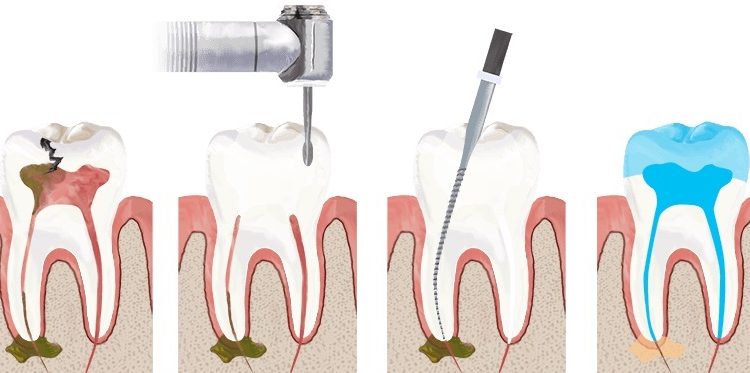
For treatment you might need to seek a dentist or an endodontist based on the difficulty level of your root canal procedure as well as your own comfort level with the doctor. The procedure of a root canal generally involves numbing your teeth first with the help of anesthesia. Then a hole is drilled for access into the teeth and the decayed tissue is removed along with the debris. The root canal files are used for cleaning out. After placing a number of files of increasing diameter into the access hole, the sides of the root canal are scrubbed and scraped by working the files down full length. The debris inside is flushed off every now and then with sodium hypochlorite or water

The procedure further involves with sealing of the tooth. Sometimes, the sealing is carried out after a week in order to clear up the infection. The doctor prescribes you medication and the tooth’s exterior hole is filled up with a temporary filling so as to keep it away from food particles or other contaminants. The tooth filling materials includes a rubber compound called gutta percha and a sealer paste. It is placed inside the root canal after which the restoration of the tooth is carried out as a final step.

Well, root canal procedures have had the reputation of being painful, but these days with high end equipment’s at hand, dentists do ensure that the treatments are painless to a great extent.