Dental Treatment for Children With Special Needs

Many of us are not aware that children with dental practices do vary for children with special needs and most of the times parents concentrate on their mental needs. Somewhere down the line dental needs take a back seat, at times due to ignorance about this fact as well.

As per the Maternal and Child Health Bureau, children with special needs are twice as likely as normal children to get dental issues. Hence, when you are a parent of a special child, you need to be twice as alert to check for any underlying symptoms of dental health and take due action against it.

Children with special needs include children having physical, emotional, behavioral or developmental conditions of chronic nature and suffer from neurological disorders, vision and hearing impairment, cerebral palsy, down syndrome and more, to name a few.

Dental Treatment for Children With Special Needs

Common Oral Conditions in Special Needs Children
In general it is not easy to keep the teeth of children with special needs clean due to their irregular alignment and crowding as well. Some kids with special needs might also have conditions like cerebral palsy, connective tissue disorders or impaired immune systems.
At times kids with special needs are on medications for a prolonged period of time. This also results in decay of tooth or gum tissue overgrowth.

Dental Advice and Preventive Care
Dental care needs attention right from the very beginning after birth. When the infant does not have teeth, using wet pads to clean the gum region helps and when the kid develops teeth, brushing them twice a day certainly helps not only in keeping the dental conditions at bay but also maintaining a daily routine. To maintain the health of your child’s teeth use toothpastes that contain flouride and avoid excess intake of foods loaded with sugar or starch. Get your kid into a habit of brushing teeth after meals and rinsing properly with water in order to reduce the acidity of sugary foods.

Well, it’s not a big deal to manage the dental health of your little ones with special needs. With some mindfulness, preventive measures and support of your dentist you can avoid related issues with ease.

RRDCH is a premier dental college and hospital in Bangalore offering BDS, MDS, Phd and certificate courses. One of the best Dental Colleges in Mysore Road

*Sourced from the Internet
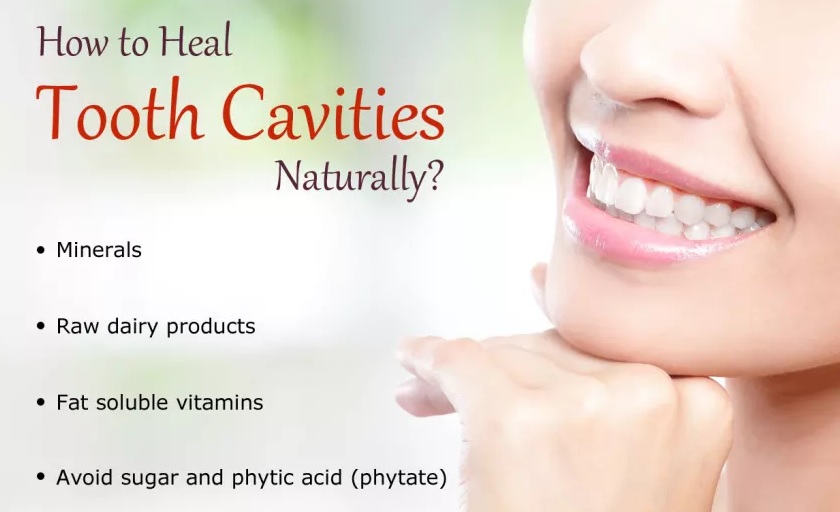
How to Heal Cavities Naturally

We all know that Cavities is a very common dental health disorder but what we don’t know is that we can prevent it using naturally by making certain changes in your diet. There are many causes of cavities but one of the main reasons is besides decay is dental anxiety. Furthermore, it’s good to be aware of the fact that cavities are avoidable and even reversible to some extent particularly the smaller ones that too at the convenience of your home, with certain dietary changes. But, before we talk about the food let’s find out what causes cavities and the factors working around cavity formation.

How to Heal Cavities Naturally

CAUSES

Plaque Acid Presence – Plaque acids are one of the main causes that lead to tooth decay and are produced by the bacteria that reside in our mouths. These acids attack teeth and dissolve the vital minerals on the surface of the teeth.

Deficiency of Soluble Vitamins – Deficiency of soluble Vitamins especially Vitamin D and others like A, E and K in the diet.

Deficiency of Minerals – Deficiency of vital nutrients like calcium, magnesium and phosphorus in the diet.

Excess Processed Sugar – Excess sugar in diet feeds oral bacteria thereby restricting the flow of dental fluids causing decay through demineralization and decalcification.

Excess Phytic acid – Also known as Phytate, Phytic causes mineral deficiencies by blocking them and osteoporosis.
A study was carried out to figure out the dietary effects on cavities. The study involved 62 kids having cavities. These kids were further divided in 3 groups as follows –

  • Group 1 followed a standard diet plus took oatmeal.
  • Group 2 followed a routine diet plus took Vitamin D supplements.
  • Group 3 followed a grain less diet plus took Vitamin D supplements.The results showed that nearly

all cavities of Group 3 healed, which followed a diet that was free from grains and rich in milk and meat, fruits and vegetables.

NATURAL TREATMENT/ REVERSAL
To avoid cavities, you need to make certain changes in diet in addition to regular brushing as well as flossing.

Avoid Sugar – Sugar is one of the main causes of tooth problems. So keeping your sweet tooth at bay is always a good idea because sugar it is highly acidic in nature and cause decay through decalcification and demineralization.

Avoid Food Rich in Phytic Acid – Ancient food preparing methods, like fermentation of dough, sprouting and more kept phytic acids at bay. Phytic acid is present in foods like grains, beans, seeds and nuts. Using traditional food preparing methods like above can help reduce pytic acids by a staggering 50% to 100%.

Additionally follow a diet that is rich in vitamins and minerals and keep cavities as bay as well as reversal of existing ones.


RRDCH is one of the best private dental college in Bangalore Karnataka


*Sourced from the Internet

Want to Sleep like a Baby? – Meet Your Dentist!

There are certain sleep issues which you would never relate with your dentist but if you actually feely sleepy while doing important stuff like driving, have trouble concentrating or wake up every morning with a headache then it’s advisable that you visit your dentist. Yes, primarily dentists deal with your teeth care but your over-all wellness does matter the most and the symptoms that have been mentioned above are said to be the root cause to many other conditions and dental as well.

Want to Sleep like a Baby

If you are experiencing one or more of the above symptoms then take an appointment of your dentist because he is the one who will examine your mouth and help you out. Actually, when the dentist examines the mouth, teeth and jaw line, he/ she is able to figure out whether you are getting enough sleep or not. For example, if your enamel is worn out then it indicates that you are stressed out and suffering from anxiety bouts which makes individual grind teeth at night. Examining the shape of the jaw the dentist can figure out if you are at the risk of sleep apnea or not. Besides, the shape and positioning can also help the dentists figure out if the sleep deprivation is related to sleep apnea or is it snoring. Particularly when it is about snoring or OSA, a form of sleep-disordered breathing, the dentists are aware.

If your dentist suspects of you having a sleep disorder they will recommend you to a sleep physician but it’s not just examination that helps your dentist, its conversations around your sleeping habits and issues as well. Hence, try to talk to your dentist and tell him or her in case you are experiencing insomnia, sore throat or dry mouth and general wellbeing overall.

Apparently, Dentists are trained to deal with sleep apnea and can help you a lot in getting or regaining your quality sleep. Many dentists use the mandibular advancement device which looks like a sports mouth guard but when you sleep it opens your airway and, they even suggest you lifestyle changes like keeping away from computer screens before sleeping or consuming a low-fat diet. The other machines usually used to treat sleep apnea include continuous positive airway pressure (CPAP) machines especially for people who are not suffering from obesity. They even offer alternative treatment options if required. The use of oral appliances that require a power source and are portable devices are used by patients suffering from sleep apnea.

Well, if you want to sleep like a baby and the aforementioned reasons are disrupting your sleep then it is advisable to check up with your dentist and do the needful.

check here for your dental issues

*Sourced from the Internet

Gum Bleeding is a Matter of Concern

Do you know that gum bleeding is actually a matter or concern and it’s advisable to meet up a dentist if you happen to split blood while brushing your teeth or if you find your gums bleeding. Even the dental health experts term it as an alarm pointing towards some dental conditions. It is known to occur due to bacterial infection of the gum tissue also leading to redness, inflammation and swelling besides bleeding gums. The condition is caused to poor hygiene practices. Bleeding gums are also related to gingivitis where in the gum tissue gets inflamed.

Though, if you find the problem is not enough you may try some home remedies to help you out.

CLOVE OIL – This is one of the home remedies that gives instant relief almost. It is mostly used when you have tooth aches because it is anti-inflammatory, analgesic and anesthetic as well.

COCONUT OIL – Coconut oil is said to have natural health properties and due to its anti-inflammatory nature, it can be used for fighting mouth plaque and reducing gum bleeding as well. For that you need to swish coconut oil in your mouth for 10 -15 minutes daily till to get relief.

SALT WATER GARGLES – Using salt water to rinse your mouth can be of a great help in reducing the levels of bacteria and provide quick relief from pain.

TURMERIC HONEY MIX – Turmeric and honey both are said to have anti-fungal and anti-microbial properties and well a mix of these to super ingredients can actually help a lot to relieve your gums from bleeding and inflammation. Just apply honey and turmeric paste across your gums and leave it for 10 minutes, then rinse.

The above mentioned home remedies can work well with mild infections but that is just for temporary relief, for a long lasting oral health, you need to follow a meticulous dental routine. Also, if you by any means sense that the infections are severe and not mild, it’s advisable that you consult a dentist immediately.

Public Health Dentistry is oriented towards meeting the oral health needs of communities that lack dental health facilities. The objective is to bring people at large within the fold of dental health through outreach programs. Through rural dental camps and adopted satellite centres

*Sourced from the Internet

Do You Brush Your Teeth Properly

All of us brush our teeth daily, once or twice in a day but do we really do it the way it should. Furthermore, many of us are not even aware about the type of brush we need to be using. So, let us dig into some interesting or rather enlightening information of sorts around brushing your teeth properly.
Brushing needs to be done using a proper technique. If you happen to brush your teeth really hard or over brush, it might damage your teeth as per dental experts. Brushing hard causes the enamel wear and tear, gums to recede besides cavities on the roots.

Here are a few tips on brushing your teeth properly without causing damage –

Do You Brush Your Teeth Properly

Brush Gently – Your gums are soft and sensitive so whenever you brush, brush your teeth like you iron your pure silk sarees, softly and not like you scrub your bathroom floor. Move your brush in clockwise circular movements gently across your teeth. Do not try the saw like motion.

The Right Brush – Many of us think that buying a brush with hard bristles will help us in keeping our teeth clean. But, it is a myth and a we need to be aware of the fact that a brush with soft bristles can work with better efficiency and without damaging your enamel. Particularly if you have sensitive teeth, a soft brush is a must have for you.

Floss and Clean – Many of us simply brush our teeth sometimes once a day and sometimes twice a day but many of us do not floss or clean our tongue on an everyday basis. This will help you keep mouth odour besides avoiding plaque deposits on your teeth.

Dental Visits routine – Do cleaning of your teeth every six months from your dentists. This will help you keep dental issues at bay.

Well, brushing your teeth the way it should be done can help you reduce a lot of your dental issues and keep your teeth in shape for a longer period. Do it for a beautiful smile that lasts years longer and allows you to hog on that gourmet favorites of yours longer as well. Happy Eating.

The department of Public Health Dentistry is oriented towards meeting the oral health needs of communities that lack dental health facilities. The objective is to bring people at large within the fold of dental health through outreach programs.

Dental Abscess

Dental Abscess – All You Need To know About

Many of us aren’t really aware of dental abscess. Tooth abscess is apparently a painful condition and occurs when the root of the tooth is infected or the infection lies amidst tooth and gum. This condition is known as gingivitis or gum disease and is known to occur due to tooth decay or high severity causing trauma and pain to the tooth.

The symptoms of tooth abscess include swollen neckglands, difficulty while chewing, swelling and redness of gums, sensitivity with hot or cold and fever as well. Tooth abscess can spread to the root and to the bones supporting the tooth as well and mind it abscess spreads quickly in a period of just two days or so, post the start of the infection. So, it is important to consult your doctors if you find one or more of the above symptoms with yourself.

Abscess are of two types –
Periapical abscess – This occurs when one nerve of the tooth is dead or about to die and is caused inside the tooth. It shows at the tip of the tooth’s root and spreads around the bone surrounding it eventually.

Periodontal abscess – This occurs when there is an infection between the teeth and gum usually due to accumulation of food particles and debris within the two. It becomes worse after the infections surrounds the bone below the gums.
Treatment

Dental Abscess needs to be treated from a dentist. The procedure is known as root canal therapy and most of us are familiar with this treatment because it is a common dental treatment. During the procedure, the tooth is extracted while drainage occurs through the socket or alternatively at times incision is made into the gum tissue to drain out the abscess

Tooth abscess is a common condition of teeth that can occur to anyone and everyone at some point of time or other. In order to delay the process or avoid it to an extent it is advisable to follow proper dental hygiene that includes brushing teeth atleast two times a day and that too properly besides flossing, tongue cleaning and using mouthwash for a fresh breath and cavity free mouth.

Rajarajeswari Dental College and Hospital is one of the  Best Dental Colleges in Bangalore

10 Different Causes of Tooth Sensitivity

10 Different Causes of Tooth Sensitivity

Tooth sensitivity is a common problem among people of all ages be it children, adults or the aged. There are many different causes of tooth sensitivity and some of the main causes are largely unknown at times. Tooth sensitivity can be dealt with properly if we are aware of its causes. So, here a list of 10 causes that lead to tooth sensitivity issues.

Regular use of Mouthwash – Some of us use mouthwashes which might contain chemicals and alcohol thus leading to increased sensitivity in teeth.
Solution – Using mouth wash that consists of neutral fluoride

Regular use of Whitening Toothpaste– Some of the tooth whitening chemicals that manufacturers use in their toothpastes consist of chemicals that cause tooth sensitivity issues.
Solution – Use custom made mouth grinders after dentist consult

Excessive plaque deposits– Heavy plaque deposits also lead to teeth sensitivity issues because tooth enamel wears away after excessive deposits of plaque.
Solution – Floss and brush properly and two times a day after eating

Cracked Tooth – You can experience tooth sensitivity if there’s a tooth with a chip off or crack.
Solution – Consult your doctor for treatment like extraction or cap fitting.

Past Dental Treatment – If you have had some dental procedures like root anal, crown placement or extraction then teeth sensitivity issues do occur.
Solution – Consult your doctor to check for an infection possibility

Improper Brushing – The question that even though we brush regularly, 2 times a day why tooth sensitivity affects us, might haunt many of us suffering from tooth sensitivity issues. The truth of the matter is we rarely care to check out once the drill of tooth brushing. Due to improper or sometimes brushing using force our teeth wear out and lose their protective layers. Now this leads to an exposure of the canals that connect your dental nerves. When these canals face exposure against sticky or acidic foods or high temperatures, they’re bound to cause discomfort.
Solution – Use a brush with soft bristles and brush properly.

Dental disease – With age we as humans suffer from deteriorating gums cause tooth sensitivity. This includes gum disease or gingivitis issues.
Solution – Consult your dentist for teeth sealing advice

Food high on acids – Many of us are not aware that eating food that has acids in excess can lead to tooth sensitivity issues. This includes foods like pickles, lemon, tomato sauce to name a few.
Solution – Avoid foods high on acids

Dental Hospitals in Bangalore 

5 Dental Care Tips For Healthy Teeth and Gums

5 Dental Care Tips For Healthy Teeth and Gums

Many a times we tend to ignore dental health while we do care about over all health of the body as in heart and more. This ignorance usually leads to a lot of dental health issues. Well, better late than never. Here are a few tips on everyday dental care, to help you keep your teeth and mouth healthy and dental issues at bay.

Tooth Brush – First things first. Get a good tooth brush for yourself. If possible opt for electric toothbrushes because they are way more superior compared to manual ones. They are highly efficient in cleaning mouth areas and come with small brush heads. Hence, they are recommended by most health professionals. Well, if you don’t have one, then a manual with soft bristles could be used. Its advisable to change a tooth brush every three months, not less not more. In case your tooth brush wears off in two months then you are not brushing properly for sure. Simply contact your dentist for tips on brushing.

Brushing – We all know how to brush and that we need to brush atleast two times a day if not more. Once in the morning to flush away all the bacteria that has accumulated over night and once before going to bed because our saliva, which protects us against plaques dries up when we sleep. Brush for around 2 minutes holding the brush at 45 degrees and clean all the gums as well as teeth faces without fail.

Flossing – Many of us do brush twice a day but still face issues of bad breath and plaque deposition. The reason is simple, because of not flossing regularly. Flossing is equally important to brushing and needs to be done regularly. It is said that over 90% of teeth issues arise from between teeth issues. So it is advisable to keep a floss box handy and floss every single day twice. Flossing is simple process that involves holding the floss tightly and clean between two teeth by gently gliding it.

Tongue Cleaning – This is the third dental care routine that needs to be done regularly just like brushing or flossing. Use a good quality tongue cleaner and clean your tongue every morning to scrape away the bacteria from the tongue and get a fresh breath.

Mouth Wash – A mouth wash will help you to shove away the bad breath and experience fresh breath enhancing your confidence. But do make sure that the mouth wash is free from alcohol as it tends to reduce the saliva inside the mouth thus making way for bacteria. A mouthwash rinse will help you reach to areas where a brush otherwise cannot.

Well, dental hygiene is very important as it could lead to other conditions. If that’s not motivating enough for you to look into dental hygiene, remember that if you have no teeth, you would neither be able to smile with confidence, neither look your best, nor eat the gourmet recipes the world has in store for you. So, do think about it.

Know about Rajarajeswari Dental College and Hospital, Banglaore

Emergency Orthodontic Care

Emergency Orthodontic Care – An Overview

There is a very rare possibility of any emergency occurring with respect to dental issues. Most of the dental issues do not get you into an emergency situation but yes sometimes, dental issues might lead to pain and irritation or discomfort.

Here is a run down some of these issues and how to deal with them.

Ligature issues – This issue arising when you use brackets. Fine wires or rubber bands are used to hold the brackets. At times the ligatures may become loose and stick to your lip. This could lead to irritation. Hence, when a ligature goes loose you may tighten it by bending it back with the help of a rubber attached on the back of pencils.

Mouth Sores – If you wear braces, getting mouth sores might just be a common possibility with you. This does lead to irritation, discomfort and mouth ulcers. At such times, mouth wash and warm salt water gargles do help out in suppressing the pain and discomfort.

Swallowing – If you by mistake swallow some piece related to your braces, when you are wearing braces then, its better to consult the doctor immediately. The symptoms include sneezing, coughing or wheezing.

Loose Brackets and more – If you wear braces, you usually are aware of these issues. These brackets tend to loosen up due to chewing or eating crunchy or hard foods. This can lead to problems like discomfort due to bracket sticking out. When such an issue occurs you can easily use a sterile tweezer to slide the bracket along the wire. Then you need to rotate it inorder to get it back to its usual position.

Wire Protruding – As mentioned before if a wire becomes loose, you can use a pencil with a rubber end to push the wire against the tooth so as to avoid the irritation it causes. In case it becomes unbearable contact your orthodontist immediately. If it is not causing any discomfort, better to leave it as it is until your next appointment with the doctor. Only in an exceptional case when you cannot reach an orthodontist and the discomfort is too bad, simply cut the protruding wire with sharp clippers. Do take care of not swallowing the piece of wire that gets snipped. To protect yourself from doing so you may fold the tissue paper around that area. Also apply some relief wax on the area.

Having said that, it is advisable to reach out to the orthodontist or the dentist when dental issues occur.

All About Halitosis and How To Deal With It

All About Halitosis and How To Deal With It

Halitosis is not occasional bad breadth that you get due to eating stuff like garlic or onions that are generally responsible for the same, but it is apparently the chronic condition of bad breath. Bad breath does make us feel really embarrassed obviously, but even more if we get to know this from our near or dear ones. Many people from kids, adults to, even couples suffer from these issues leading to intimacy problems in couples at times as well.

Here’s a run down some of the common reason behind Halitosis
Lack of dental care –Dental care involves brushing teeth two to three times a day, flossing and using mouthwash on a daily basis. Poor dental care results in plaque building, further leading to bad breadth and other dental issues.

Food, Braces and Dentures – Food particles like garlic, onion and other food with strong smell do top the list when it comes to bad breadth causing agents. More so, if you wear braces or dentures. After having food, a lot of particles are stuck behind inside the mouth, cavities and even on the surface of the tongue but more importantly within the braces, if they are not cleaned properly. As for dentures, lose fitting ones cause infections and sores. This generally leads to bad breadth experiences post lunch.

Dental Issues – Another major cause of Halitosis is dental problems like tooth decay and gum disease. Dental conditions like periodontal disease and gingivitis occur when the bacteria succeeds in saving itself from being rinsed away by hiding itself.

Dry Mouth – Dry mouth occurs when the mouth isn’t able to make enough saliva needed to wash out the bad breadth causing bacteria from the mouth. So, dry mouth could be a result of poor dental care as well as addictions like smoking and alcohol.

Health Conditions – Many of us might not be aware of the fact that bad breadth could also be a result of conditions that affect the throat, nasal passage or sinus. Furthermore, according to the American Dental Association diseases related to the kidney or liver could also result in bad breadth. Bad breadth is a common issue during pregnancy due to cravings and intake of different types of foods, hormonal changes, nausea and morning sickness.

Dealing with Halitosis – Obviously, to deal with Halitosis, you need to find out the root cause of the condition. Is it braces, a result of poor dental hygiene, bad breadth causing foods or anything else. Once, you know the cause, you can figure out the suitable treatment for the same.

In case the situation is grave and you sense some internal condition, then is it advisable to seek a dentist as soon as possible. Generally, if its an external condition proper dental routines can easily solve the problem. For issues related to braces, its good to visit an orthodontist and for children related bad breadth issues, a pediatrician. Quit smoking or drinking if you do and bad breadth is a result of it.

Having foods which are low on sugar or sugar products can help you deal with dry mouth issues. These days dry mouth issues can be resolved by prescribing artificial saliva as well. Bad breadth related issues due to medication can be dealt with only by consulting a good dental specialist.


RRDCH is a premier dental college and hospital in Bangalore offering BDS, MDS, Phd and certificate courses. One of the best Dental Colleges in Mysore Road